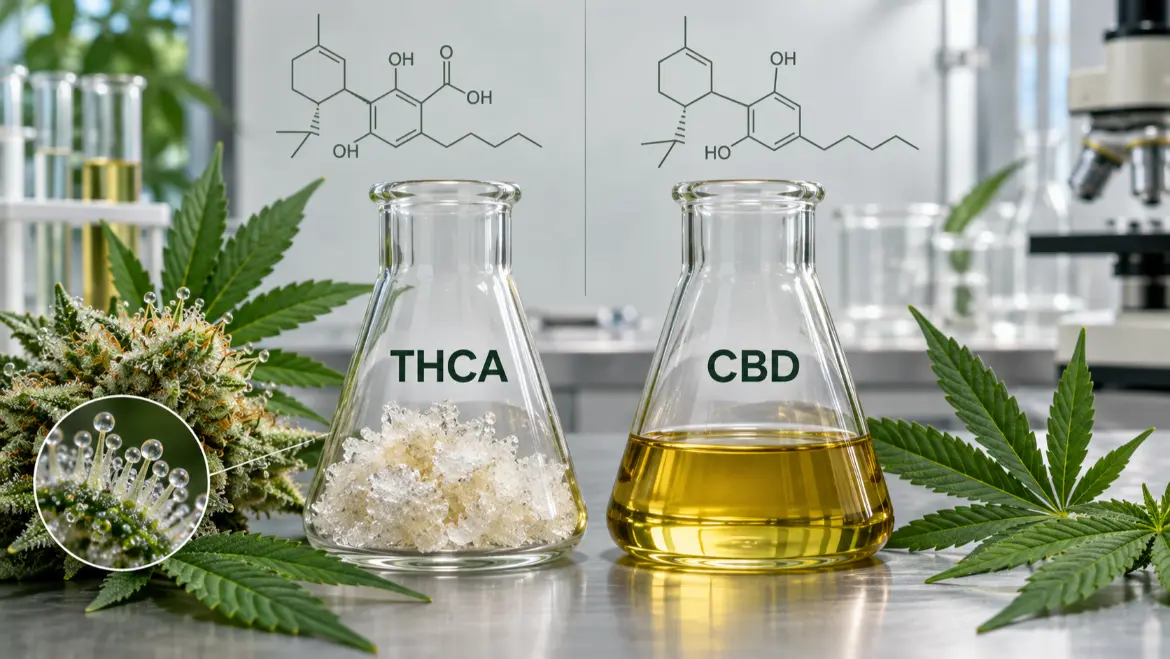
THCA vs CBD comes down to chemistry, heat and expected effects. THCA is the acidic precursor to THC found mainly in fresh cannabis. It is not generally considered intoxicating in its unheated form, but heating can convert it into THC. CBD is a separate cannabinoid that does not produce a THC-like high. Either product may still create legal, medication or drug-testing concerns.
Quick Answer: In a THCA vs CBD comparison, THCA has the greater intoxication and drug-test risk because heat can transform it into THC. CBD itself is not the target of standard marijuana testing, but a CBD product containing detectable THC may still contribute to a positive result.
Table of Contents
THCA vs CBD at a Glance
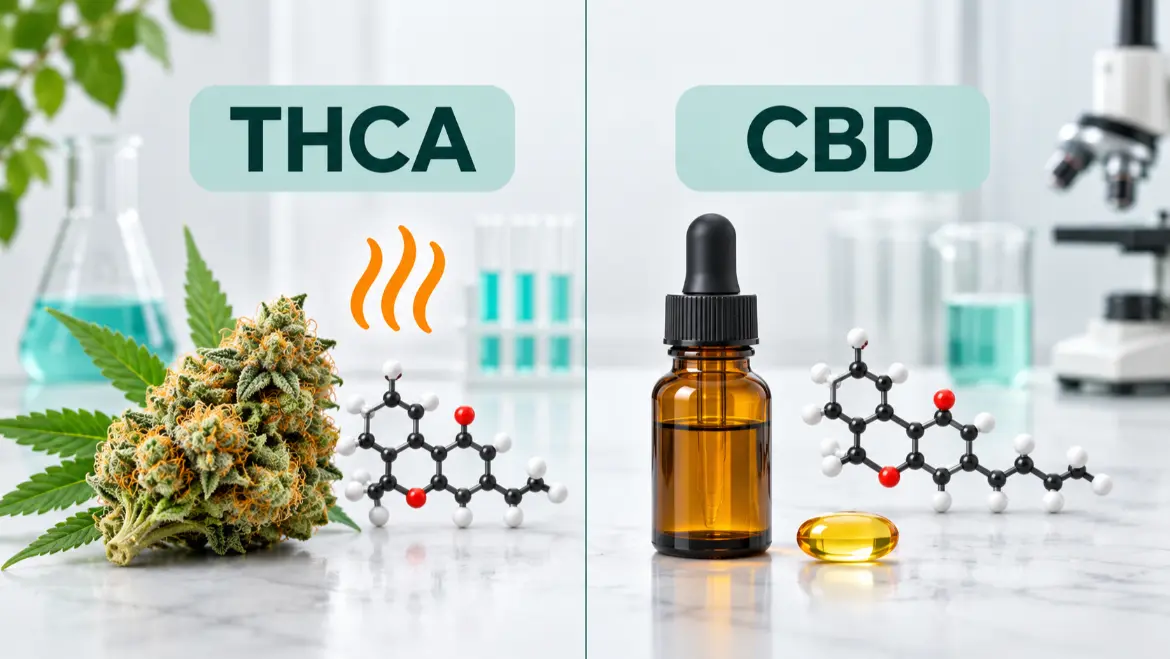
The clearest way to understand THCA vs CBD is to compare what each compound is before looking at marketing claims.
| Comparison point | THCA | CBD |
|---|---|---|
| Full name | Tetrahydrocannabinolic acid | Cannabidiol |
| Natural role | Acidic precursor to THC | Separate cannabinoid produced by cannabis |
| Intoxicating in its original form | Not generally considered intoxicating when unheated | Does not produce a THC-like high |
| What heat does | Can convert THCA into THC | Does not transform CBD into THC in the same way |
| Drug-test concern | High, especially after heating or use of THC-producing material | Lower for pure CBD, but contaminated or full-spectrum products may contain THC |
| Common formats | Raw flower, concentrates and products marketed as THCA | Oils, capsules, gummies, topicals and prescription medicine |
| FDA status | No FDA-approved THCA treatment | One purified prescription CBD drug is FDA approved for specific seizure disorders |
| Legal status | Depends on total THC, product, state and current law | Depends on product type, claims, THC content, state law and FDA rules |
This table is a starting point, not proof that a particular product is accurately labeled. The actual cannabinoid profile should come from a recent, batch-specific laboratory report.
For a reliable THCA vs CBD decision, the laboratory result matters more than the product name.
What Is THCA?
THCA stands for tetrahydrocannabinolic acid. It is produced naturally by the cannabis plant and is the acidic chemical precursor of delta-9 THC.
Fresh and unheated plant material can contain much of its potential THC in the THCA form. Over time—and more quickly when exposed to sufficient heat—THCA can lose a carboxyl group through a process called decarboxylation and become THC.
A peer-reviewed critical review of THCA chemistry explains that this conversion can happen during smoking, vaporizing or baking. Slow conversion may also occur during storage and processing.
That heat-sensitive conversion is the most important fact in any THCA vs CBD discussion. A product marketed as “non-intoxicating THCA” may behave very differently when it is heated.
This is why every THCA vs CBD explanation should state whether the THCA product will be heated.
Readers exploring hemp flower may also encounter THCA-rich products beside more conventional flower. Our LitFarms review provides related brand context, but a brand page should never replace the exact product’s current certificate of analysis.
What Is CBD?
CBD stands for cannabidiol. Like THCA, it comes from Cannabis sativa, but it is a different cannabinoid with different pharmacology.
CBD does not create the same intoxicating high associated with THC. It also does not convert into THC merely because it is heated in the way THCA does.
That does not mean every CBD product is risk-free. The FDA’s consumer guidance about CBD warns about possible liver injury, medication interactions, changes in alertness and uncertainty surrounding long-term use.
The FDA has approved one purified prescription CBD medicine for specific seizure disorders. That approval does not mean ordinary retail CBD oils, gummies or capsules are FDA approved, clinically proven or suitable for treating health conditions.
Within THCA vs CBD, prescription-drug evidence for one CBD formulation does not validate every retail CBD product.
For readers comparing finished CBD brands rather than individual cannabinoids, our Nordic Oil review provides additional product-format context. Verify current labels and laboratory reports before relying on any brand description.
What’s the Difference Between THC and THCA?
People asking what’s the difference between THC and THCA are comparing a precursor with the compound it can become.
THCA contains an additional carboxyl group in its molecular structure. That structural difference limits how it interacts with the brain compared with THC, which is why unheated THCA is not generally described as producing the classic THC high.
When THCA is sufficiently heated, decarboxylation removes that extra group and produces THC. The conversion may not be perfectly complete, and the final amount depends on temperature, time, storage, processing and the product itself.
This means THCA and THC should not be treated as interchangeable on a label. However, they also should not be treated as unrelated. Potential THC after heating is central to both effects and regulatory testing.
In a THCA vs CBD comparison, CBD has no equivalent heat-driven pathway into THC. THCA does, which creates the larger difference in intoxication risk.
Chemically, THCA vs CBD is therefore different from comparing two versions of the same cannabinoid.
How Heat Changes the THCA vs CBD Comparison
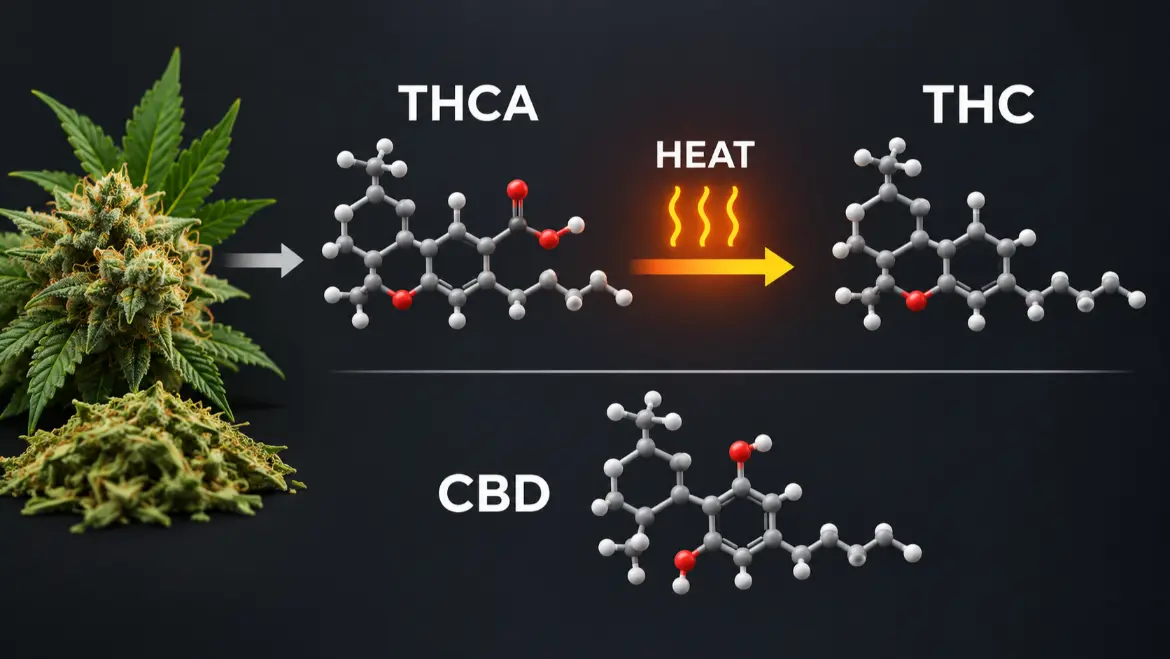
Heat is the dividing line that many short explanations miss.
Raw or carefully unheated THCA is not generally considered intoxicating. Once it is smoked, vaped, dabbed, cooked or otherwise heated, some of it can become delta-9 THC.
CBD remains CBD under ordinary product use. Heating may degrade cannabinoids or alter a formulation, but it does not create the same straightforward THCA-to-THC conversion.
Therefore, THCA vs CBD cannot be compared accurately without asking how the product will be used. “THCA is non-intoxicating” is incomplete if the product is intended to be heated.
Method of use can change the practical outcome of THCA vs CBD, even when the package remains unchanged.
Never drive, operate machinery or perform safety-sensitive work after using a product that may be intoxicating. Product labels such as “hemp,” “legal” or “compliant” do not establish that a person is unimpaired.
Will THCA Get You Stoned?
If someone asks will THCA get you stoned, the answer depends mainly on heat and the product’s actual composition.
Pure, unheated THCA is not generally expected to cause the classic THC high. However, products may already contain some delta-9 THC, and heat can convert THCA into additional THC.
That is why smoking or vaping THCA-rich flower can be intoxicating even when the product was marketed around its pre-heating THCA content.
The result can also be unpredictable. A label may not fully represent the batch, storage may change the cannabinoid profile, and individual responses to THC vary.
Within THCA vs CBD, CBD is the non-intoxicating side of the comparison. CBD may still cause drowsiness or interact with medicines, but it is not expected to produce the characteristic THC high.
Will THCA Show on a Drug Test?
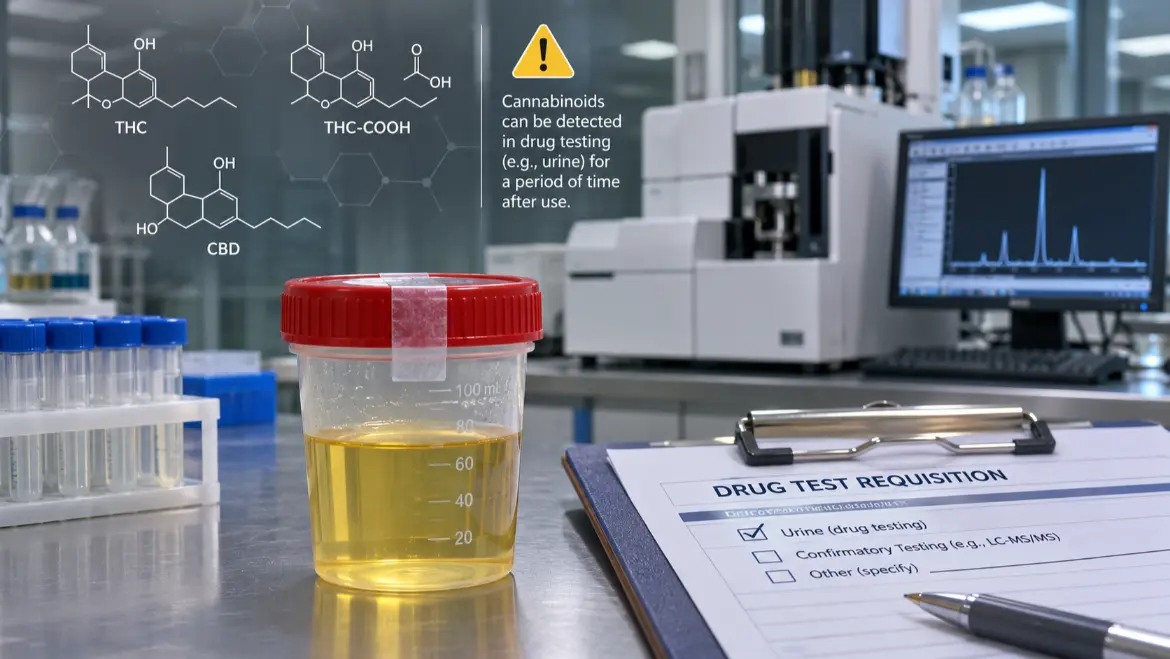
Yes, THCA products can create a meaningful risk of a positive marijuana drug test. There is no reliable way to promise that a THCA product will pass testing.
Heating THCA creates THC, which the body metabolizes. Standard workplace urine tests generally look for a THC metabolite rather than testing whether the original product was labeled hemp, THCA or marijuana.
The current SAMHSA federal workplace testing FAQ identifies delta-9-tetrahydrocannabinol-9-carboxylic acid as the reported urine analyte. The Department of Transportation testing rule lists the applicable initial and confirmatory cutoffs for federally regulated urine testing.
Two Different Chemicals May Be Called “THCA”
Drug-testing documents sometimes abbreviate the urine metabolite THC-COOH as “THCA.” This is not the same compound as tetrahydrocannabinolic acid found in raw cannabis.
That shared abbreviation causes substantial confusion:
- Plant THCA: tetrahydrocannabinolic acid, the precursor that can become THC.
- Testing “THCA”: delta-9-tetrahydrocannabinol-9-carboxylic acid, also called THC-COOH or THCC, a metabolite measured in urine.
The practical conclusion remains the same: using a THCA-rich product—especially after heating—can expose the body to THC and may lead to a positive result.
For testing purposes, THCA vs CBD should be approached as a risk comparison rather than a pass-or-fail guarantee.
When evaluating THCA vs CBD for drug testing, THCA generally presents the more direct risk. Pure CBD is not the target of a standard marijuana test, but retail CBD products may contain enough THC to create a problem.
The DOT notice about CBD products and testing warns safety-sensitive employees that mislabeled or THC-containing CBD products can produce a confirmed positive result. A claim that the exposure came from a legal hemp product may not reverse the outcome under an employer’s testing rules.
Can CBD Cause a Positive Drug Test?
CBD itself is not what standard marijuana urine tests are designed to detect. The concern is THC that may be present in the finished product.
Full-spectrum products can contain THC. Products labeled broad-spectrum or isolate may be marketed as THC-free, but labeling errors, contamination and incomplete processing are possible.
This is why the drug-test answer in THCA vs CBD is not simply “THCA fails and CBD passes.” THCA carries the clearer THC pathway, while CBD product risk depends heavily on the finished formula and labeling accuracy.
Anyone subject to employment, probation, athletic, military or other testing should not rely on packaging language or a retailer’s verbal assurance. No retail cannabinoid product should be presented as guaranteed to pass a drug test.
Is THCA Weed?
The question is THCA weed has more than one possible meaning.
THCA is a cannabinoid found naturally in cannabis, including the flower commonly called weed. However, THCA is a chemical compound, not a separate plant species.
Products marketed as “THCA flower” are cannabis flower selected or labeled for a high THCA concentration. Whether a particular product is legally classified as hemp or marijuana depends on current federal and state definitions, testing rules and the product’s total cannabinoid profile.
The USDA hemp FAQ explains that licensed hemp production testing accounts for potential conversion by calculating total THC from delta-9 THC and THCA. Plant material that exceeds the applicable hemp THC level does not qualify under the USDA production program.
So, in THCA vs CBD, both compounds may come from cannabis, but their presence does not by itself answer whether the finished product is legally hemp, marijuana or permitted in a particular state.
Is THCA Legal?
THCA should not be described as universally legal.
Federal hemp rules, USDA production requirements, FDA product rules and state controlled-substance laws do not always use identical tests or definitions. Some states specifically restrict total THC, intoxicating hemp products, THCA flower or particular product formats.
A product may also change chemically after manufacture. Age, storage and heat can increase the amount of THC relative to THCA.
For that reason, a THCA vs CBD article cannot provide one legal answer for every product and location. Check:
- the exact product format;
- the batch laboratory report;
- delta-9 THC and THCA results;
- calculated total THC;
- the laws of the state where the product is purchased, possessed and used;
- age and shipping restrictions; and
- any employer, housing or travel policy.
Legal marketing language is not a substitute for current government guidance or advice from a qualified attorney.
The legal answer to THCA vs CBD can change across state lines and product categories.
THCA vs CBD: Health Claims and Evidence Limits
Marketing frequently runs ahead of evidence for both cannabinoids.
THCA has been studied in laboratory, animal and limited human contexts. These early findings do not establish that a retail THCA product treats inflammation, nausea, pain, cancer, neurological disease or any other condition.
A recent review of acidic cannabinoids describes scientific interest in THCA and related compounds while emphasizing the need for stronger evidence. Ingredient-level research should not be treated as proof for a finished product.
CBD has more human research than THCA, but evidence varies significantly by condition, dose and formulation. Results involving a regulated prescription medicine cannot be transferred automatically to an over-the-counter oil or gummy.
When comparing commercial cannabinoid categories, our Elyxr vs URB comparison shows how brands may differ in positioning and product range. It should not be read as proof of medical benefit.
The responsible conclusion for THCA vs CBD is that neither should be promoted as a universal remedy, harmless wellness shortcut or replacement for professional care.
Safety Considerations Before Using Either
Cannabinoid effects can vary according to the compound, THC exposure, product quality, other ingredients, medicines, health conditions and individual sensitivity.
Important precautions include:
- Do not drive after an intoxicating or potentially intoxicating product.
- Avoid combining cannabinoids with alcohol, sedatives or other substances that increase drowsiness without professional guidance.
- Ask a healthcare professional about possible medication interactions.
- Keep all cannabinoid products away from children and pets.
- Avoid use during pregnancy or breastfeeding unless a qualified clinician specifically directs otherwise.
- Seek urgent medical care for severe confusion, chest pain, trouble breathing, fainting, persistent vomiting or another serious reaction.
CBD can affect how some medicines are metabolized. THCA products can expose users to THC after heating and may also contain other cannabinoids or contaminants.
The safety gap between THCA vs CBD therefore depends on more than the compound name. The complete formula and method of use matter.
Neither side of THCA vs CBD should be assumed harmless solely because it came from hemp.
How to Read a THCA or CBD Laboratory Report
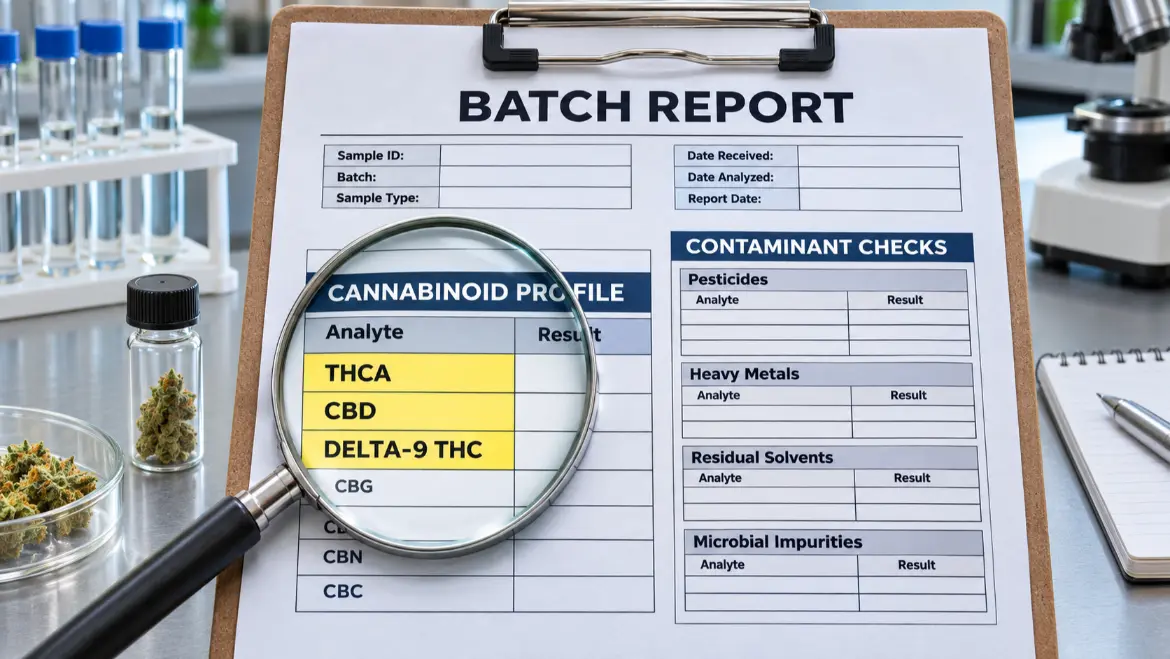
A certificate of analysis can help verify what a laboratory measured, but it must match the exact product batch.
1. Match the Batch or Lot Number
The number on the report should match the number printed on the product. A report for another batch does not verify the item in hand.
2. Check the Laboratory and Test Date
Look for the laboratory’s identity, report date and sample information. An old report may not represent a newer formula or batch.
3. Read the Cannabinoid Profile
Review separate entries for THCA, delta-9 THC, CBD and any other cannabinoids. Do not judge THCA vs CBD from the largest marketing number alone.
4. Understand Total THC
USDA commonly describes total THC using the potential conversion calculation:
Total THC = delta-9 THC + (THCA × 0.877)
The factor accounts for the molecular weight lost during decarboxylation. A low pre-heating delta-9 THC value does not mean a high-THCA product has no intoxicating potential.
5. Review Contaminant Testing
Depending on the product and jurisdiction, useful panels may include pesticides, heavy metals, residual solvents, microbes and mycotoxins. Confirm that the report covers the relevant finished product rather than only raw material.
For another example of why brands and formulations require separate evaluation, see our HempLucid vs Sabaidee comparison. Always prioritize the current batch report over general brand reputation.
THCA vs CBD: Which One Is the Better Choice?
There is no universal winner.
Someone trying to avoid intoxication should recognize that a heated THCA product can produce THC. Someone who must pass drug testing should understand that neither category offers a guaranteed safe result.
CBD may appear more suitable when a person specifically wants to avoid a THC-like high, but medication interactions, drowsiness, inaccurate labels and trace THC remain relevant.
THCA may interest consumers because it begins as a non-intoxicating acidic cannabinoid. However, that description becomes misleading when the intended use involves heat.
The safest way to approach THCA vs CBD is to start with the decision that matters:
- If intoxication must be avoided, do not use a product that can produce THC.
- If drug testing matters, do not rely on a “THC-free” or “legal hemp” promise.
- If medication interactions matter, speak with a pharmacist or clinician.
- If legality matters, check current rules for the exact product and location.
- If product quality matters, verify the batch-specific laboratory report.
Frequently Asked Questions
What Is THC-A?
“THC-A” is another way people write THCA, or tetrahydrocannabinolic acid. It is the acidic precursor to THC found in cannabis. The search phrase what THC A usually refers to this same compound.
Will THCA Get You Stoned Without Heat?
Unheated THCA is not generally considered intoxicating like THC. However, real products may contain some THC, and storage or processing may change the profile. Heating THCA can convert it into intoxicating THC.
Does THCA Turn Into THC?
Yes. Heat can remove THCA’s carboxyl group through decarboxylation and create THC. This conversion is central to understanding THCA vs CBD.
Will THCA Show on a Drug Test?
It can. A THCA-rich product may contain THC, and heating converts THCA into THC. The body then produces metabolites commonly targeted by marijuana testing. There is no dependable guarantee that THCA use will produce a negative result.
Does CBD Show Up on a Drug Test?
Standard marijuana tests do not target CBD itself. A CBD product may nevertheless contain THC because it is full-spectrum, contaminated or inaccurately labeled, creating a positive-test risk.
Is THCA the Same as CBD?
No. THCA is the acidic precursor to THC, while CBD is a separate cannabinoid. The two differ in structure, heat response, intoxication potential and drug-testing risk.
Is THCA Stronger Than CBD?
“Stronger” is not a useful direct comparison. Heated THCA can produce intoxicating THC, while CBD is not intoxicating in the same way. Effects also depend on product content, route, amount and individual response.
Can You Take THCA and CBD Together?
Products may contain both, but combining cannabinoids can make effects and interactions harder to predict. Ask a healthcare professional before combining them with each other, alcohol, sedatives or prescription medicines.
Are THCA and CBD FDA Approved?
The FDA has not approved THCA as a treatment. One purified prescription CBD drug is approved for specific seizure disorders, but that does not make ordinary retail CBD products FDA approved.
Bottom Line
THCA vs CBD is not simply one cannabinoid versus another. THCA is a heat-sensitive precursor that can become intoxicating THC, while CBD is a separate non-intoxicating cannabinoid.
The decisive point in THCA vs CBD is that heat can change THCA into THC.
THCA-rich products carry a direct intoxication and drug-test concern, especially when heated. CBD does not create a THC-like high, but retail CBD products can still present medication, labeling and trace-THC risks.
Do not rely only on terms such as “raw,” “hemp,” “legal,” “non-intoxicating” or “THC-free.” Review the exact batch report, intended method of use, current local law and personal drug-testing or medication concerns before making a decision.
This article contains affiliate links. If you purchase through our links, we may earn a commission at no extra cost to you. We only recommend products we genuinely believe in. Read our Affiliate Disclaimer for full details.