
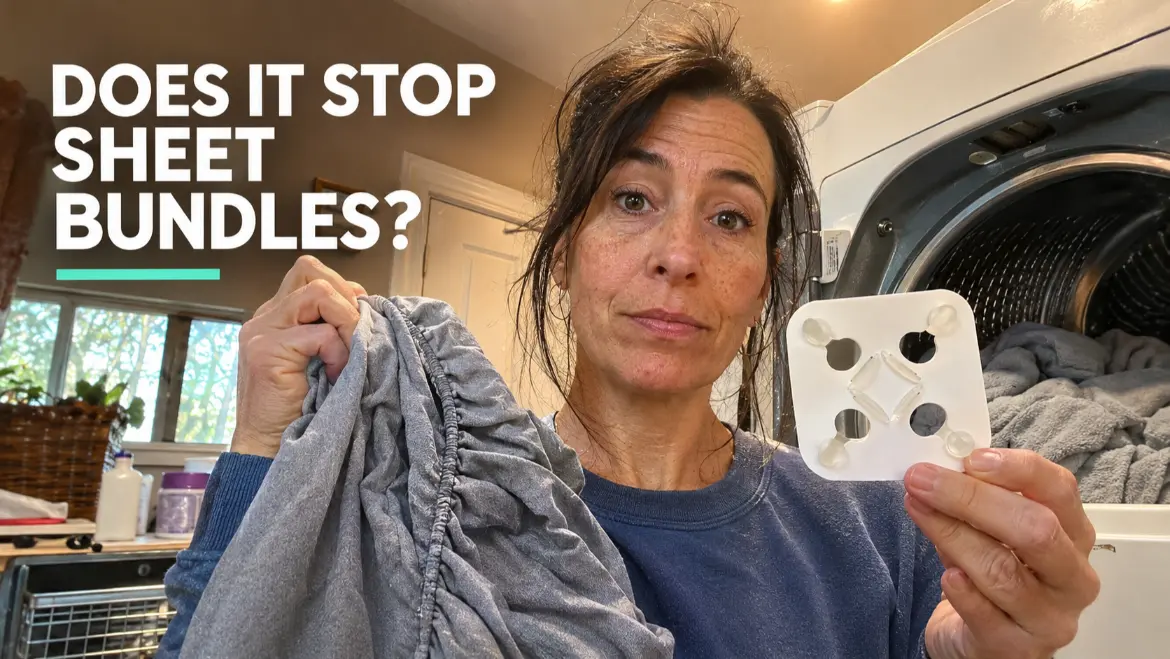
Pulling a fitted sheet from the dryer only to find pillowcases, socks or towels trapped inside it is a familiar laundry frustration. The outside can feel dry while the center remains damp, forcing you to untangle the bundle and run the dryer again. Wad-Free is designed to stop that cycle by holding all four corners of a sheet together so the fabric moves through the washer and dryer in a more open shape.
This Wad-Free review reaches a balanced conclusion: the device may make problem loads easier to handle and reduce items becoming trapped inside sheets, but it is not a guaranteed cure for every washer, dryer, fabric or load. Correct attachment, enough drum space and the right cycle matter. Independent testing also suggests that its drying-time benefit can be modest rather than dramatic.
If your sheets regularly turn into heavy wet bundles, Wad-Free may be worth trying. If your sheets already wash separately without tangling, or they contain silk, rayon, bamboo, eucalyptus, Tencel or lyocell, this is probably not the right laundry accessory for you.
Table of Contents
Wad-Free Review at a Glance
| Category | Assessment |
|---|---|
| Main purpose | Helps keep flat and fitted sheets from twisting into a tight bundle |
| Package | Two reusable sheet devices, enough for two sheets |
| Price checked | $19.99 on the official site on November 27, 2026 |
| Setup | Four sheet corners attach to four tabs on each device |
| Best potential benefit | Fewer trapped items and less hands-on untangling |
| Main drawback | A learning curve and extra attachment time before washing |
| Important restriction | Do not use high spin; not for silk or rayon-family fabrics |
| Evidence | Positive long-term editorial experience, but mixed independent lab results |
| Overall verdict | Useful for recurring sheet-bundling problems, but results depend on the load and appliances |
Wad-Free Review: What Is Wad-Free for Bed Sheets?
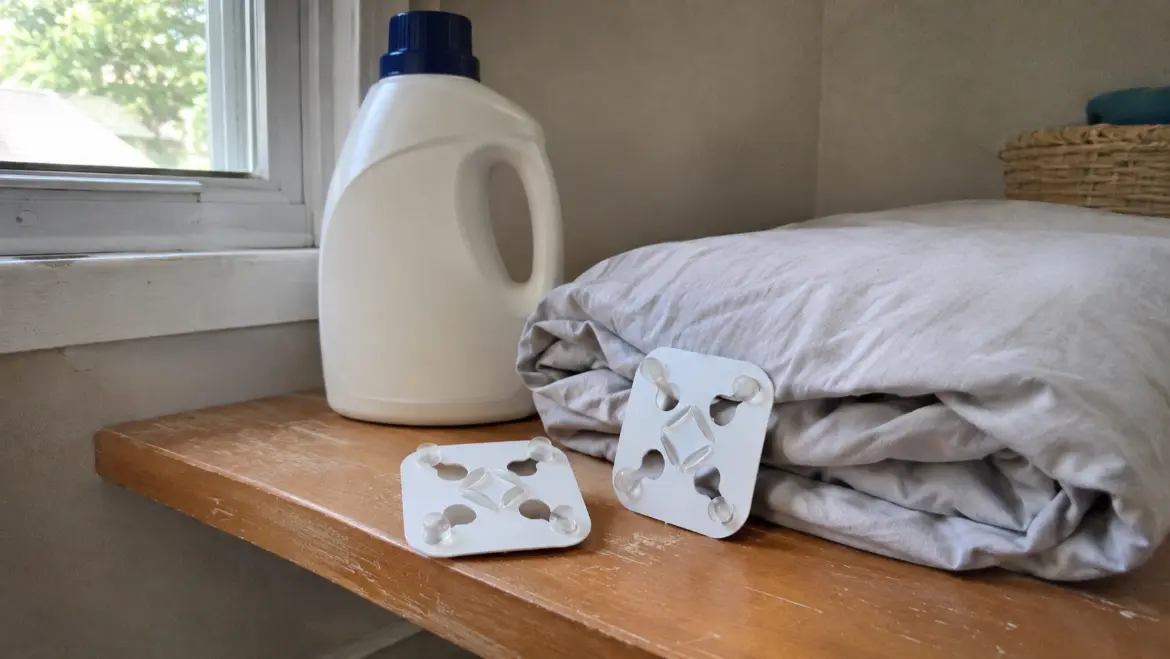
Wad-Free for Bed Sheets is a reusable, square laundry device with four flexible tabs. You attach one corner of a flat or fitted sheet to each tab. This gathers the corners while leaving the center of the sheet open, creating what the brand describes as a parachute-like shape.
The idea is simple: a loose sheet can twist around itself or swallow smaller laundry. Keeping its four corners controlled may help the fabric stay more open during tumbling. One package contains two devices, so it can handle two sheets when each sheet has its own Wad-Free.
The official Wad-Free product page lists the set at $19.99 when checked and says the devices are reusable, made in the United States and intended for flat or fitted sheets of any size. The company says a device may last a year or longer depending on use. The same page makes an important admission: Wad-Free is not 100 percent effective in every load. That realistic limitation should be part of any honest Wad-Free review.
The Shark Tank Wad-Free Story
Inventor Cyndi Bray presented Wad-Free on Shark Tank Season 13, Episode 5, which originally aired on November 5, 2021. She made a deal with Kevin O’Leary, giving the product a major visibility boost. You can read the company’s account on its official Shark Tank Wad-Free page.
The television story makes the product memorable, but a Shark Tank appearance is not proof that it will work equally well in every home. The useful question is whether it reduces the inconvenience you personally experience: attaching the device, pulling apart wet bundles, checking the dryer and restarting damp loads.
Wad-Free Review: How Does the Device Work?
Each corner of the sheet covers one clear tab. The fabric-covered tab is pushed through the round opening and then slid into the narrow channel to lock it. With all four corners attached, the sheet is less free to twist into a rope or wrap around smaller items.
The device does not generate heat, absorb moisture or mechanically shorten a dryer cycle. Any drying improvement would come indirectly from keeping the sheet more open and reducing the chance of damp laundry becoming trapped inside it.
That distinction matters when evaluating the brand’s “up to 75% faster” claim. “Up to” describes a possible best-case result, not the result every household should expect.
The manufacturer recommends using a washer and dryer with ample room for the bedding, following the sheet’s care label, avoiding high spin and fluffing each attached sheet open before loading. Those operating details can affect whether a Wad-Free review turns positive or frustrating.
Wad-Free Review: How to Attach It Correctly
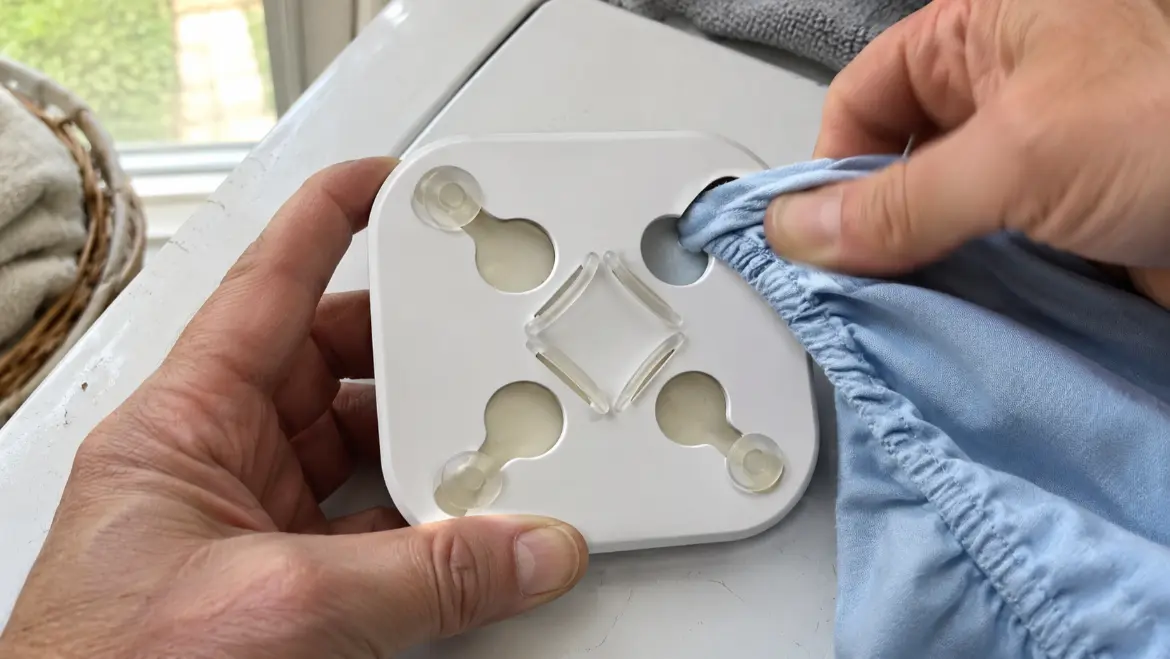
Installation is the biggest learning curve, so follow the brand’s official Wad-Free instructions before the first load.
- Lay the sheet where you can comfortably reach all four corners.
- Slide a clear round tab inward to release it from its channel.
- Place one sheet corner completely over the open tab, leaving enough loose fabric around it.
- Push the fabric-covered tab through the round opening in the white base.
- Slide the tab into the narrow channel until it is secure.
- Give the sheet a light tug to confirm that it will not slip out.
- Repeat for the remaining three corners.
- Use a separate Wad-Free for every sheet in the load.
- Fluff each attached sheet open like a parachute before placing it in the washer and again before transferring it to the dryer.
Do not thread bare fabric through the opening. The fabric must cover the open tab before the tab is pushed through and locked. Insufficient slack can allow a corner to release during the cycle.
For a fitted sheet, attach near the elastic edge if the fabric and elastic fit easily. For deep pockets or thick elastic, the brand recommends following the corner-pocket seam and attaching through the double layer farther from the edge.
Its official troubleshooting guide suggests experimenting about 10 to 24 inches or more from the elastic when the standard position does not work.
Wad-Free Review: Does It Actually Stop Sheets Balling Up?
The available evidence is mixed, which is why this Wad-Free review avoids an absolute yes or no.
Bob Vila contributor Toni DeBella reported using the device for more than a year across roughly four to six sheet sets per month. Her review says properly secured sheets did not emerge as a tangled ball, although learning the attachment method took time and the sheet corners could become wrinkled. Read the Bob Vila Wad-Free review for that long-term personal account.
Reviewed reached a less enthusiastic result in controlled laundry tests. In a mixed load, its dryer ran for 82 minutes with Wad-Free versus 88 minutes without it, but the wash cycle took two minutes longer, leaving a net saving of about four minutes.
In its sheet-only test, drying differed by only one minute. The device reduced smaller items trapped inside the sheets, yet did not consistently eliminate tangling. See the Reviewed Wad-Free lab test for its complete method and findings.
These findings are not necessarily contradictory. Appliance size, drum movement, sheet material, load composition, cycle selection and attachment technique can change the result.
A household with a persistent fitted-sheet bundle may notice a practical improvement even if the timer barely changes. Another household that already washes two sheets in a roomy machine may see little difference.
What This Wad-Free Review Evidence Really Suggests
- Preventing trapped laundry may be the most repeatable benefit. Even a modest reduction can mean fewer damp pillowcases hidden inside a fitted sheet.
- Drying-time claims should be treated as load-specific. The independent test did not reproduce a dramatic reduction.
- Attachment technique matters. A loose corner changes the shape the product is supposed to maintain.
- There is no universal result. The manufacturer itself says the product is not fully effective in every situation.
That is the fairest answer this Wad-Free review can give: it can improve a recurring laundry problem, but it is not a guaranteed shortcut to a 75 percent shorter cycle.
Wad-Free Review Test: Does It Make Laundry Easier to Handle?
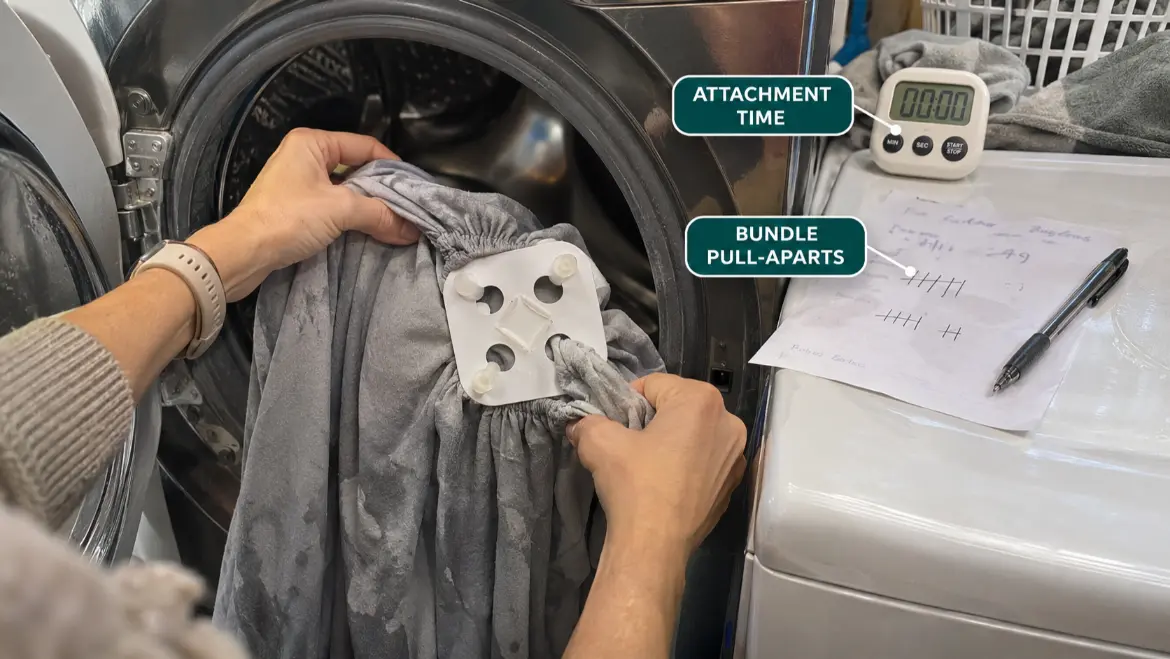
Most reviews focus on total drying time. That number matters, but it can miss the effort that makes sheet day annoying. A device could save only a few minutes on the timer yet still feel useful if it stops you from opening the dryer, separating a wet bundle and restarting the load.
A better home evaluation records both machine time and hands-on laundry handling. Use the same sheet set, load size, washer, dryer and cycle for each comparison.
Simple Real-World Wad-Free Review Test
Run at least three control loads without the device and three comparable loads with it. Record:
| Measure | Without Wad-Free | With Wad-Free |
|---|---|---|
| Time needed to attach all corners | 0 | ___ minutes |
| Corners released during washing | Not applicable | ___ |
| Wet bundles pulled apart after washing | ___ | ___ |
| Items trapped inside a sheet | ___ | ___ |
| Dryer interruptions to untangle laundry | ___ | ___ |
| Extra drying cycles or added minutes | ___ | ___ |
| Damp spots when the cycle ends | ___ | ___ |
| Minutes of active handling | ___ | ___ |
| Noticeable corner creasing | ___ | ___ |
Repeat loads matter because one perfect cycle can be luck. If Wad-Free adds two minutes of setup but saves six minutes of untangling, reloading and checking, the convenience may justify it even without a spectacular drying-time change.
If attachment takes longer than the problem it solves, it probably is not worthwhile for your routine.
This hands-on scorecard is the strongest unique addition to our Wad-Free review because it measures the frustration people actually want to remove—not only the number displayed on the dryer.
Wad-Free Review: What Should You Expect From Drying Time?
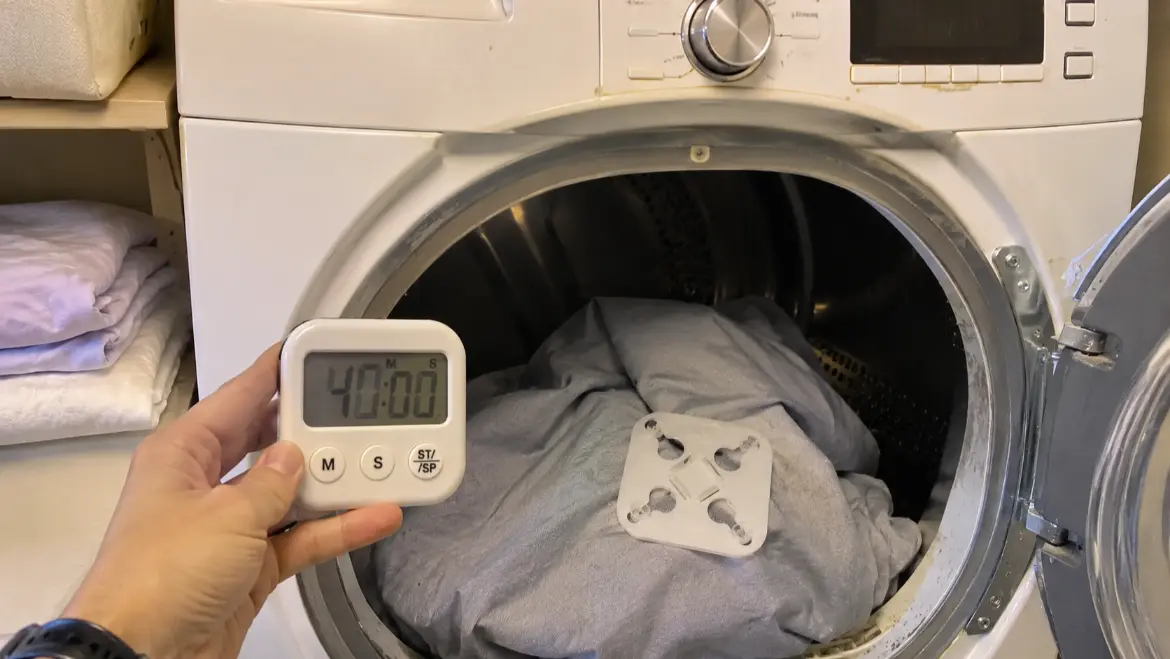
The official product page promotes drying “up to 75% faster,” but the phrase should not be interpreted as an average or guarantee.
The independent Reviewed test found only a six-minute dryer difference in one mixed load and a one-minute difference in a sheet-only load. Its total mixed-load saving fell to approximately four minutes after accounting for the longer wash cycle.
The biggest possible gain may occur when a sheet would otherwise trap a large damp bundle and require another cycle. If no bundling occurs in the control load, there is less wasted drying time for the device to recover.
For a fair Wad-Free review at home, do not change multiple variables at once. Keep the load, cycle, dryer setting and sheet set consistent. Stop the timer only when the entire load reaches the same dryness standard.
Also count manual interruptions. Opening the dryer three times to untangle sheets is part of the real result.
Wad-Free Review: Does It Prevent Trapped Laundry?
This may be Wad-Free’s most convincing use case. Pillowcases, socks and small towels can disappear inside a fitted sheet and remain damp. By holding the corners together, the device reduces the size and availability of the openings through which smaller pieces can enter.
Reviewed observed fewer trapped items even though its time savings were limited. That makes Wad-Free potentially more appealing for mixed loads than for a sheet-only load. Still, the manufacturer recommends giving sheets ample drum space and not overloading the appliances.
If your primary problem is fabric choice rather than laundry handling, our Bamboo vs Tencel vs Cotton Sheets guide explains how these materials differ.
This comparison is especially relevant because Wad-Free says it should not be used with rayon-family sheets, including products marketed as bamboo, eucalyptus, Tencel or lyocell.
Wad-Free Review: Compatible Sheets, Cycles and Appliances
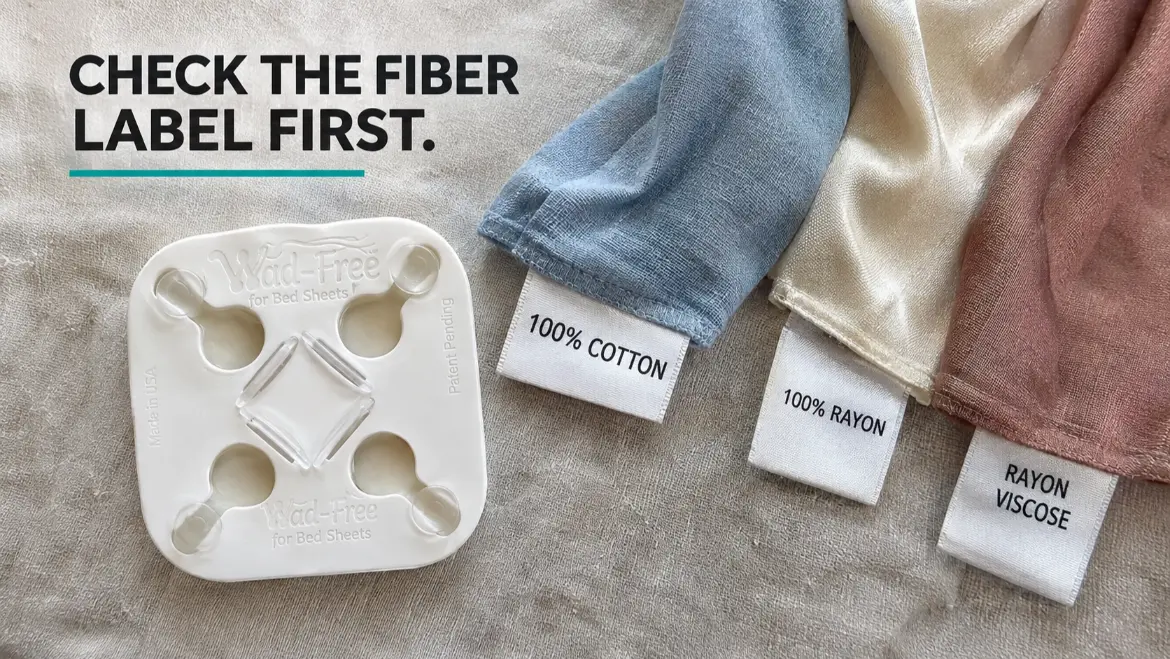
The brand says Wad-Free for Bed Sheets can be used with flat or fitted sheets of any size, provided the material is compatible and the washer and dryer have enough room.
Cotton, polyester and many common blends may be suitable when their care instructions align with the device guidance.
Use these conditions as a checklist:
- Follow the sheet manufacturer’s care label.
- Select Gentle/Delicates or an appropriate Normal cycle.
- Use cold or warm water.
- Use low or medium spin, never high spin.
- Dry on low or warm heat as the fabric label permits.
- Do not crowd the washer or dryer.
- Attach every sheet to its own device.
- Check the tabs when transferring the load.
- Fluff the sheet open before both washing and drying.
The device is not recommended for silk or rayon, and the brand specifically includes bamboo, eucalyptus, beechwood, viscose, modal, lyocell, Tencel and acetate in that warning.
It is also not recommended for weakened, thinned or damaged sheets.
This restriction is more significant than many buyers may expect. Always read the fiber-content label rather than relying on the marketing name printed on the front of the package.
Wad-Free Review: Setup Time and Learning Curve
Attaching eight corners for a two-sheet set adds a task before each wash. Once familiar, some users may complete it quickly; first attempts can take longer because each fabric-covered tab needs enough slack and a firm lock.
Bob Vila’s reviewer said the process added a couple of minutes and initially felt unintuitive. That tradeoff should be considered alongside the time you currently spend unwrapping sheets, rescuing trapped laundry or restarting the dryer.
One practical habit is to attach the devices while stripping the bed rather than waiting beside the washer. Keep the device in the laundry area so it does not disappear into a linen closet.
Before starting the cycle, tug each attachment lightly and make sure the drum is not overloaded.
In any fair Wad-Free review, the setup time belongs in the calculation. A convenience tool only earns its place if the effort it removes is greater than the effort it adds.
Wad-Free Review: Common Problems and Fixes
A Sheet Corner Slips Out
Cover the tab with more loose fabric, push it fully through the opening, slide it into the channel and tug gently to confirm the lock. Reduce the washer spin speed.
The Fitted Sheet Still Forms a Bundle
Fluff it open before loading and use the alternate corner-pocket-seam attachment position for thick elastic or deep pockets. Give the bedding more room in the drum.
Everything Is Dry, but the Sheets Are Tangled
They may have finished drying earlier and continued tumbling while dry. Check the load sooner on the next cycle.
Small Items Remain Trapped
Confirm that every sheet has its own device and all four corners are attached. Reduce the load size rather than packing the drum.
Corners Look Creased
This can occur where the tabs grip the fabric. Removing the sheet before it becomes completely overdried may reduce stubborn creasing. Do not use the product on delicate or weakened fabric.
Wad-Free Review Pros and Cons
Pros
- May reduce tight sheet bundles and trapped smaller items
- Can reduce manual untangling during a normal laundry day
- Reusable rather than single-use
- Works with both flat and fitted compatible sheets
- Two devices are included for a standard two-sheet load
- No sharp edges were noted in Reviewed’s lab assessment
- The brand publishes detailed setup and troubleshooting instructions
Cons
- Requires attaching four corners to every sheet
- Has a learning curve and can add a few minutes before washing
- Does not eliminate tangling in every load
- Independent testing found modest rather than dramatic drying-time savings
- Cannot be used with silk or rayon-family sheets
- High-spin cycles are not recommended
- Attachment points may leave temporary creases or dimples
- Results depend on appliance space, load composition and technique
Wad-Free Review: Is It Worth the Price?
At the $19.99 official-site price checked for this Wad-Free review, the set costs roughly $10 per reusable device. The value is less about the price of one dryer cycle and more about how often the product prevents a repeat problem.
It may be worthwhile if you wash sheets weekly, routinely find damp items trapped inside them and repeatedly interrupt or extend the drying cycle.
Over months of regular use, reducing that frustration can be meaningful even when each individual load saves only a few minutes.
It is harder to justify if you rarely experience bundling, wash sheets alone in a roomy machine, use incompatible fabric or prefer high-spin and hot-care routines.
Before buying, compare the current price, shipping and return terms on the official Wad-Free product page rather than relying on an old listing.
Wad-Free Review: Who Should Consider It?
Wad-Free makes the most sense for:
- Households whose fitted sheets regularly swallow pillowcases or towels
- People who repeatedly stop the dryer to separate sheet bundles
- Users with compatible cotton, polyester or blended sheets
- Anyone willing to follow lower-spin instructions and learn the attachment method
- Larger households that wash sheet sets frequently
- Users who value easier load handling even if the timer improvement is modest
It may not suit:
- People using silk, rayon, bamboo, eucalyptus, viscose, modal, Tencel or lyocell sheets
- Anyone with damaged or thinning bedding
- Users who need or prefer high-spin laundry cycles
- Overloaded or very compact appliances with little room for bedding to move
- Households whose sheets already dry evenly without tangling
- Anyone who dislikes adding a manual setup step before washing
Wad-Free Review Alternatives to Try Before Buying
You may be able to reduce bundling without another accessory:
- Wash sheets separately from small items. This removes the socks and pillowcases most likely to become trapped.
- Reduce the load size. Bedding needs room to open and tumble.
- Pause once to shake out the sheets. This adds hands-on work but costs nothing.
- Use a cycle that matches the care label. Excessively aggressive washing can twist fabric and increase wear.
- Dry compatible items together. Very different fabric weights may reach dryness at different times.
- Check the load earlier. Avoid continuing to tumble already-dry sheets.
If your goal is a calmer bedroom rather than faster laundry, our budget bedroom noise-proofing guide covers inexpensive changes that can improve the overall sleep environment.
Wad-Free Review FAQs
Does Wad-Free Really Work?
It can reduce sheet bundling and trapped laundry when attached correctly, but results vary.
A long-term Bob Vila review was positive, while Reviewed’s controlled tests found limited drying-time savings and inconsistent tangle prevention. The manufacturer also says it is not effective in every load.
Does Wad-Free Make Sheets Dry 75 Percent Faster?
The brand says “up to 75% faster,” which is a possible maximum rather than an expected average. Independent testing cited in this Wad-Free review did not reproduce that level of improvement.
Can I Use One Wad-Free for Two Sheets?
No. The manufacturer instructs users to attach each sheet to its own device. The standard package contains two devices for two sheets.
Can I Use Wad-Free With Fitted Sheets?
Yes, if the fabric is compatible. Thick elastic and deep-pocket fitted sheets may need the alternate attachment position along the corner-pocket seam.
Can I Use Wad-Free With Bamboo or Tencel Sheets?
No. The brand says not to use it with rayon-family fabrics, including bamboo, eucalyptus, viscose, modal, Tencel and lyocell.
Can Wad-Free Go in Both the Washer and Dryer?
Yes. It is designed to stay attached through washing and drying. Check the tabs during transfer and fluff the sheet open before placing it in the dryer.
Does Wad-Free Damage Sheets?
The manufacturer says to follow the fabric care label and avoid delicate, incompatible, damaged or weakened material.
Attachment can create small temporary dimples or creases. Incorrect use or use on unsuitable sheets may increase the risk of damage.
How Long Does Wad-Free Last?
The official product page says the reusable device may last a year or longer, depending on use. That is a brand estimate, not a universal lifespan guarantee.
Is Wad-Free Only Useful for Drying Time?
No. The more practical benefit may be fewer trapped items and less manual untangling. Those measures should be included in a home Wad-Free review even if total machine time barely changes.
Wad-Free Review Final Verdict
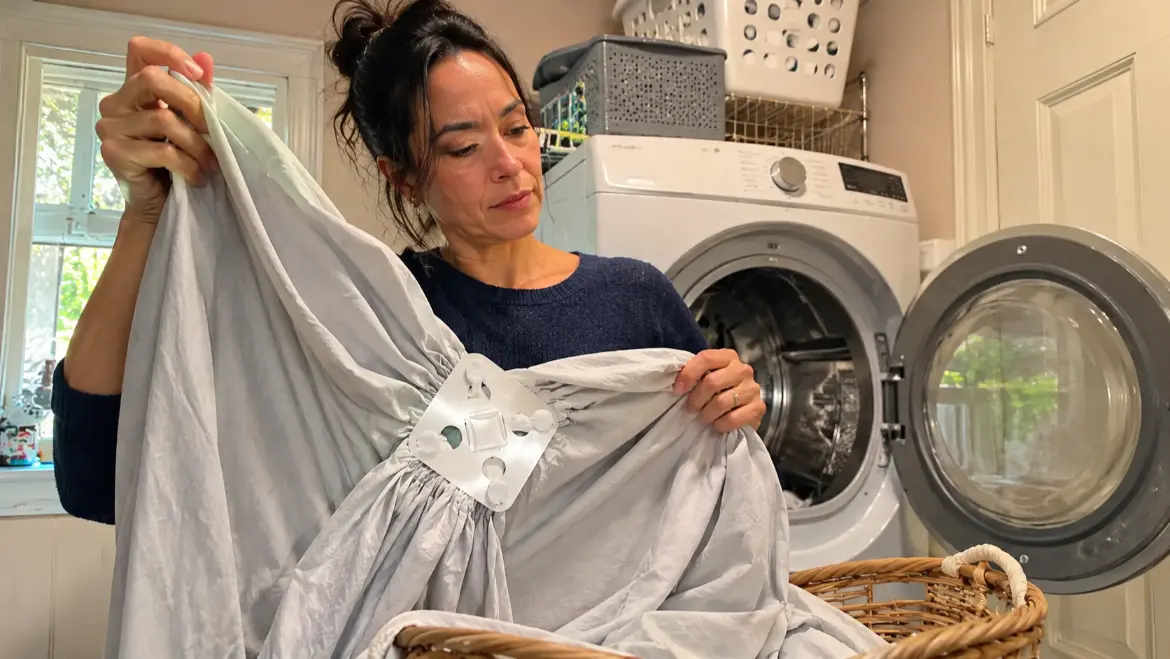
This Wad-Free review finds that the product addresses a real and irritating problem with a logical design: controlling the corners may stop sheets from wrapping around themselves and swallowing smaller laundry.
Its strongest case is not a guaranteed 75 percent reduction in drying time. It is the possibility of fewer damp bundles, fewer trapped items and less hands-on untangling.
The evidence supports realistic expectations. Some long-term users report consistently better sheet loads, while an independent lab test found only modest time savings and incomplete tangle prevention.
Correct setup, compatible fabric, adequate drum space and a non-high-spin cycle all influence the outcome.
Our final Wad-Free review verdict is simple: consider it if sheet bundling repeatedly disrupts your laundry routine, but measure attachment time and bundle pull-aparts across several loads before deciding it has earned a permanent place in your laundry room.
For people without that recurring problem—or with incompatible sheets—the extra setup is unlikely to deliver enough value.
This article contains affiliate links. If you purchase through our links, we may earn a commission at no extra cost to you. We only recommend products we genuinely believe in. Read our Disclaimer for full details.